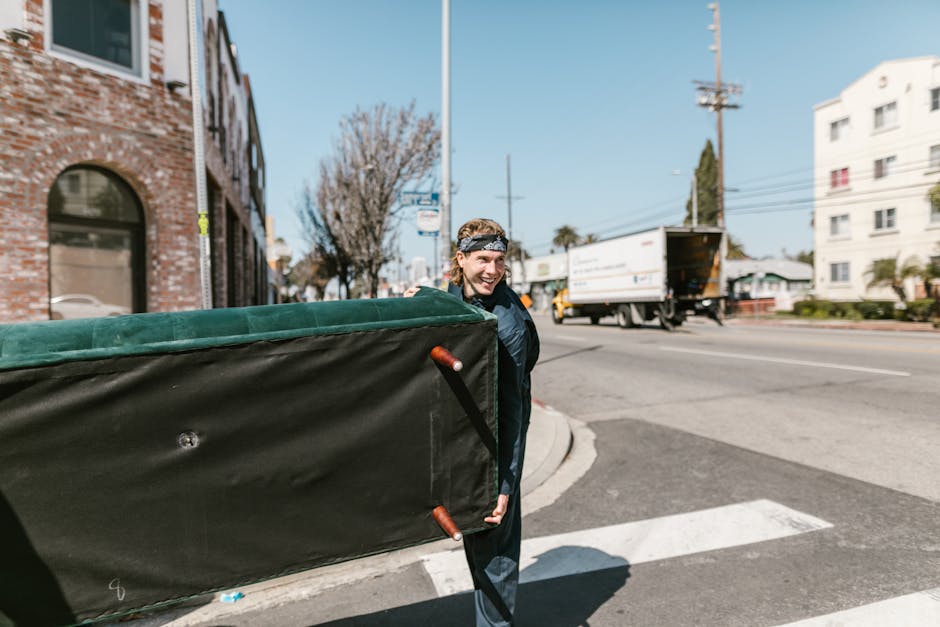
Shacklewell Road moving tips for narrow streets
Posted on 07/05/2026
Shacklewell Road moving tips for narrow streets: a practical guide for a smoother move
Moving on a street like Shacklewell Road can feel less like a standard house move and more like a logistics puzzle. Tight turns, limited kerb space, busy parking, awkward loading angles, and neighbours who still need access all add pressure fast. The good news is that Shacklewell Road moving tips for narrow streets are mostly about preparation, timing, and choosing the right method rather than brute force.
If you are planning a flat move, a house move, or a furniture delivery in this part of London, the aim is simple: keep the van close enough to reduce carrying distance, avoid delays, protect your belongings, and make the move calm instead of chaotic. In this guide, you will find a practical step-by-step approach, common mistakes to avoid, and the kind of street-level detail that makes the difference on move day.

Why Shacklewell Road moving tips for narrow streets Matters
Narrow streets change the whole shape of a move. On a wider road, the van can often park close, loading is straightforward, and there is room to correct mistakes. On a tighter road, every extra metre between the front door and the van adds time, fatigue, and risk.
That matters for a few reasons. First, long carries increase the chance of scuffs, dropped boxes, and strained backs. Second, if you block part of the street while trying to load, you may create tension with drivers, residents, or building managers. Third, the pressure rises quickly if your move includes bulky items such as a sofa, mattress, wardrobe, or piano. For those, it is worth reading practical guides like the step-by-step bed and mattress moving guide and advice on protecting your sofa during a move before you start.
In other words, a narrow street changes the definition of "well planned". On Shacklewell Road, good moving advice is not a nice-to-have; it is the difference between a controlled job and a slow, stressful one.
How Shacklewell Road moving tips for narrow streets Works
The process works by removing friction before it becomes a problem. A narrow-street move is usually won or lost in the planning stage: knowing where the van can stop, which items come out first, what needs dismantling, and how many people are needed to carry safely.
Think of it as a sequence rather than a single event:
- Assess street access and building access.
- Reduce the amount you are moving.
- Pack and label with the loading order in mind.
- Prepare awkward furniture for easier handling.
- Arrange the van, helpers, and timing around the street conditions.
The reason this matters is simple: the physical move is only one part of the job. The other part is orchestration. That is why practical prep pages such as decluttering before moving and efficient packing techniques are so relevant. They reduce the volume and improve the order in which items come out, which is exactly what you need where space is tight.
For many people, the best approach is to treat the street itself as a working constraint. Measure it, respect it, and plan around it. That sounds obvious, but it is surprising how many moves fail because the van arrives before anyone has thought about parking realities.
Key Benefits and Practical Advantages
When you plan properly for a narrow street move, the benefits are immediate and tangible. You save time, protect property, and lower stress. That may sound broad, but in practice it usually shows up in very concrete ways.
- Less carrying distance: Keeping the van close reduces fatigue and the chance of damage.
- Fewer delays: A clear plan prevents awkward repositioning and repeated trips.
- Better protection for items: More controlled handling means fewer knocks on corners, frames, and upholstery.
- Lower risk of neighbour complaints: Efficient loading helps avoid unnecessary obstruction.
- Safer lifting: Shorter routes and better team coordination reduce the temptation to rush.
There is also a financial angle. A move that runs late can become more expensive through extra labour time, parking headaches, or the need for additional trips. Even if you are using a professional service, time wasted on avoidable access issues rarely helps. If you are comparing service options, pages like the services overview, man with a van support, and house removals can help you understand which approach fits your scale of move.
One practical advantage that often gets overlooked is psychological. Once you know the access plan is sorted, the rest of the day feels manageable. And frankly, that calm head is worth a lot.
Who This Is For and When It Makes Sense
This guidance is useful for anyone moving where street width, parking, or turning space is limited. That includes top-floor flats, terraced houses, basement properties, student lets, and office clearances in dense residential areas.
It is especially useful if:
- your building is on or near a narrow one-way road;
- the van cannot safely sit directly outside the property for long;
- you have heavy or awkward items such as wardrobes, beds, sofas, or appliances;
- you are moving during busy traffic hours;
- you need a fast turnaround, such as a same-day handover;
- you are moving with children, pets, or limited helpers;
- you want to reduce the chance of damage to property or belongings.
Students, in particular, often underestimate how much easier a move becomes when the boxes are properly packed and the route is planned in advance. That is why a service like student removals support can be useful for compact flats and quick turnarounds. Likewise, if you are shifting only a few key items, a local man and van option may suit you better than a larger full-house move.
In short: if the street is tight, the move becomes a planning exercise before it becomes a lifting exercise.
Step-by-Step Guidance
Below is a practical way to organise your move when access is limited. This is the part most people find genuinely useful, because it turns a vague worry into a sequence of decisions.
1. Check the access route before moving day
Walk the route from the property to the likely van position. Look for low overhangs, tight corners, steps, railings, shared entrances, and anything that may slow a large item. If you can, note where the van might safely stop without blocking traffic or driveways.
2. Reduce the load before you pack
On narrow streets, every unnecessary item hurts efficiency. Declutter first so you are not paying to move things you no longer want. A useful place to start is this decluttering guide, which is particularly handy if your home has grown a little too full over the years. Truth be told, most people have at least one cupboard that could quietly fund half the move if they sold or donated the contents.
3. Pack for carry efficiency, not just storage
Label boxes clearly and keep the heaviest items in smaller boxes where possible. Avoid overfilling large boxes with books or dense household items. Use consistent labelling, and mark boxes that need to come out first. If you want more detail, these packing tips are a strong companion read.
4. Dismantle furniture that is likely to snag
Wardrobes, bed frames, table legs, and large shelving units are much easier to manage when broken down into manageable pieces. If you are moving a bed base or mattress, follow a methodical approach rather than forcing it through a tight doorway. For more on that, see the bed and mattress moving instructions.
5. Assign roles before the van arrives
One person should manage the door, one should guide larger items, and someone should keep an eye on the van position and surrounding street activity. This avoids that classic moving-day problem where everyone is helping at once, which somehow means nobody is actually helping.
6. Load in the right order
In a tight access situation, loading order matters. Put the largest and most stable items in first, then stack lighter, shaped, and fragile items around them. Keep essentials accessible. If you need specialist help with larger household pieces, a dedicated furniture removals service can save time and reduce handling risk.
7. Protect the route as well as the item
Corner protectors, blankets, straps, and floor coverings matter just as much as the box tape. Protecting a banister or doorway is cheaper and easier than repairing damage later. If you are moving a sofa or upholstered item, read up on sofa protection techniques before the move.
8. Keep the schedule realistic
Narrow streets slow things down. Build in extra time for parking, carrying, and repositioning. If your move day is tightly timed, speak to your mover in advance about access, lift points, and vehicle size. If your situation is urgent, same-day removals may also be worth exploring, but only if access details are clear from the start.
Expert Tips for Better Results
A few practical habits make a disproportionately big difference on narrow streets. These are not flashy ideas; they are the small adjustments that keep a move controlled.
- Use smaller box sizes for dense items. Smaller boxes are easier to carry through tight doorways and less awkward on stairs.
- Measure large items before moving day. It sounds basic, but knowing whether a sofa can clear the turn makes planning much easier.
- Keep a door-propping method ready. Doors opening and closing repeatedly slows the process and creates pinch points.
- Protect floors early. A narrow hall often sees more traffic than you expect.
- Schedule loading to avoid peak traffic. If possible, choose a time when the street is slightly quieter.
- Use a trolley only where the route allows it. A sack truck is helpful on the right surface, but less useful on steps or sharp thresholds.
If a piece feels too large, do not "just give it a go". That is how chipped walls and strained backs happen. For especially heavy items, a quick read of safe lifting advice for heavy objects is a sensible safeguard, even if you ultimately decide to hire help.
Another useful habit is to photograph the access route before the move. A couple of phone pictures of the kerb space, stairwell, or loading point can help everyone think clearly when the van arrives.

Common Mistakes to Avoid
Narrow-street moves go wrong for predictable reasons. The biggest mistakes are usually not dramatic; they are small planning gaps that stack up.
- Assuming parking will "work itself out". It rarely does.
- Bringing the wrong vehicle size. A van that is too large can create access issues and parking stress.
- Overpacking boxes. Heavy boxes are slower, riskier, and harder to manoeuvre.
- Leaving dismantling until the last minute. That is when people start forcing items through spaces they do not fit.
- Underestimating stair and doorway restrictions. Measurement beats guesswork every time.
- Not telling the mover about access limitations. A good removal plan depends on accurate information.
- Trying to lift oversized items without enough help. If the item is awkward, seek assistance rather than improvising.
One particularly common issue is the "we can probably get it through" mindset. Sometimes you can. Often you cannot. A few minutes of measuring saves an hour of awkward backtracking.
Another mistake is forgetting end-of-move cleaning. If you are vacating a property, it helps to plan the clean alongside the move rather than after you are exhausted. This guide on cleaning before moving out is a helpful addition.
Tools, Resources and Recommendations
The right tools do not make a narrow street wider, but they do make the move smoother. A modest toolkit can save time and reduce damage.
| Tool or resource | Why it helps | Best for |
|---|---|---|
| Furniture blankets | Protect corners, frames, and upholstery during tight manoeuvres | Sofas, tables, wardrobes, TVs |
| Ratchet straps | Keep items secure in the van and reduce shifting | Bulkier household goods |
| Hand trolley or sack truck | Makes short-distance transport easier where surfaces allow it | Box stacks, appliances, sturdy loads |
| Floor protection | Reduces scuffs in hallways, stairwells, and entrances | Properties with wood, tile, or laminate flooring |
| Clear labels and colour coding | Speeds up loading and room placement | Any move with multiple rooms |
| Removal service support | Helps manage planning, lifting, and access challenges | Busy streets, large moves, urgent moves |
For a complete move, the broader support pages can also help you compare what you need. Explore removals services, removal services options, and packing and boxes support if you want help beyond the basics.
If storage is part of your plan, especially when the new property is not ready, short-term storage solutions can reduce pressure and help you move in phases instead of all at once.
Law, Compliance, Standards, or Best Practice
For narrow-street moves, the most relevant standards are practical and safety-led rather than heavily legalistic. You should still think carefully about vehicle access, safe loading, and how you impact the road and pavement.
In the UK, the general expectation is that moving activity should be carried out with reasonable care for public safety, property, and the wellbeing of everyone involved. That means keeping entrances clear where possible, avoiding unsafe lifting, using appropriately sized vehicles, and following normal road and parking rules. If parking restrictions or access permissions are involved, check them in advance rather than assuming a quick stop will be acceptable.
Professional movers should also work to sensible health-and-safety practice: correct lifting technique, suitable equipment, careful handling of fragile items, and clear communication with the customer. If you want to understand how a provider approaches that side of the job, it is worth reviewing their health and safety policy and insurance and safety information.
For environmentally conscious moves, you may also want to consider reuse, recycling, and waste reduction. Rehoming unused items before moving can be a practical win on both the access and sustainability fronts. The recycling and sustainability page is a useful place to start if you want to make the move lighter and less wasteful.
Options, Methods, or Comparison Table
There are several ways to handle a narrow-street move. The right choice depends on volume, access, budget, and how much risk you are willing to take on yourself.
| Approach | Best for | Pros | Trade-offs |
|---|---|---|---|
| DIY van hire | Smaller moves with simple access | Flexible, potentially lower upfront cost | More work on you, higher chance of access problems |
| Man and van service | Flat moves, medium loads, tight streets | More manageable than DIY, good for urban access | May need careful scheduling and clear item lists |
| Full removal service | Larger homes, heavier furniture, complex access | Less stress, stronger planning support, better for bulky items | Usually the most involved service level |
| Split move with storage | Delayed move-ins or limited unloading space | Reduces pressure on move day, helpful in stages | Requires extra coordination |
If you are not sure which option fits your situation, a quick discussion with a local mover is often enough to clarify the route, van size, and labour needed. For more location-specific help, compare flat removals, office removals, and removal van support.
Case Study or Real-World Example
Imagine a move from a first-floor flat on a narrow residential street. The property has a long hallway, a bend near the entrance, and limited parking directly outside. The household includes a sofa, a bed frame, two bookcases, and around twenty boxes.
A well-planned move would probably look like this:
- the sofa and bed frame are measured first to confirm how they will pass the hallway bend;
- the bed is dismantled, and the mattress is wrapped for cleaner handling;
- books are split across smaller boxes rather than packed into heavy oversized cartons;
- the van is booked for a time when the street is less busy;
- one person is assigned to manage the doorway, one to guide items to the van, and one to position the load inside.
That move is still a physical job, of course. But with the route, packing, and parking handled properly, it becomes predictable. Predictable is what you want on a narrow street. Not exciting. Just smooth.
In a real-world scenario like this, the difference between a strained move and a decent one usually comes down to three things: less clutter, better access planning, and the right level of help. If one of those is missing, the whole process feels harder than it needs to be.
Practical Checklist
Use this checklist a day or two before the move. It is intentionally practical, not fancy.
- Confirm the van size is suitable for the street and the load.
- Check parking, loading, and any access restrictions in advance.
- Measure large furniture and note tight turns or low door frames.
- Declutter anything you do not need to move.
- Pack heavy items into smaller boxes.
- Label boxes clearly by room and priority.
- Dismantle furniture that is likely to snag.
- Protect floors, doorframes, and corners.
- Prepare blankets, straps, tape, and a trolley if needed.
- Tell everyone involved what time loading starts and who is doing what.
- Keep essentials, documents, and valuables separate.
- Plan a buffer for delays caused by traffic or tight parking.
Expert summary: on narrow streets, the move is won by preparation. If the route is clear, the load is lighter, and the van plan is realistic, everything else becomes much easier.
Conclusion
Shacklewell Road moving tips for narrow streets are really about making smart choices before the van arrives. When access is tight, the best moves are the ones that reduce unnecessary lifting, keep the route clear, and prevent last-minute improvisation. That means decluttering early, packing sensibly, measuring large items, and choosing the right level of support for your situation.
Whether you are moving a studio flat, a family home, or a few bulky items, narrow streets reward calm planning. A little structure goes a long way, and the effort you put in before move day will almost always pay you back in less stress, less damage, and less time spent shuffling boxes back and forth.
If you want help turning that plan into a smoother move, explore the relevant local service pages, compare your options, and book support that matches both your property and the street outside it.
Get a free quote today and see how much you can save.